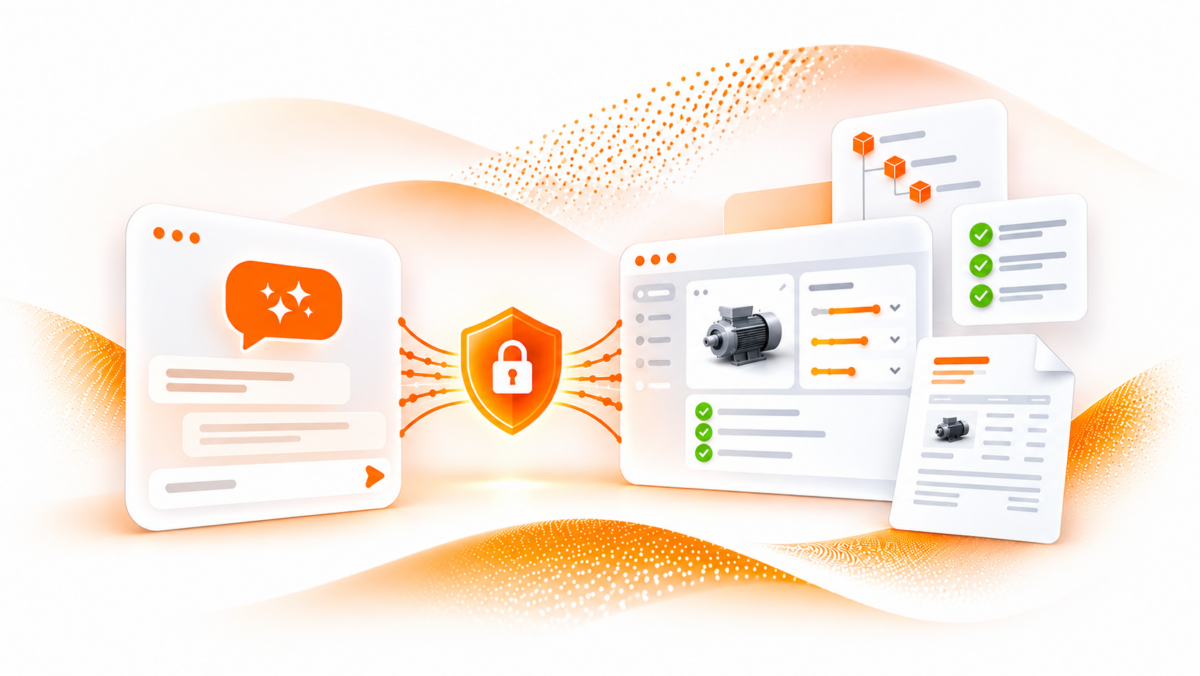
Connecting AI to CPQ without giving up control
- ai
- CPQ
- Summium
AI becomes more useful when it can work with the systems that already contain a company’s product knowledge and business logic. Model Context Protocol, or MCP, provides a way to connect AI to those capabilities without moving the logic itself into the AI. For CPQ, this opens a path from conversational assistance to real, controlled business workflows.
Artificial intelligence becomes much more useful when it can work with real business systems instead of operating only on generic knowledge. In complex sales, that means access to the business systems and context behind the sales process. At the same time, giving an AI assistant unrestricted access to these systems would not be a sensible approach. The more business-critical the process becomes, the more important it is to control what AI can access and what it is allowed to do.
This is where Model Context Protocol, or MCP, becomes interesting. MCP provides a standardized way for AI applications to connect to external tools, data sources and systems. Instead of building a separate connection for every combination of AI application and business system, selected capabilities can be made available through a common interface. For CPQ, the important point is not the protocol itself, but what this makes possible.
AI handles ambiguity. CPQ handles correctness.
What MCP actually does
A simple way to think about MCP is as a standardized service desk between AI and business systems. It makes selected capabilities available to AI, while each underlying system remains responsible for executing them correctly. In a CPQ environment, these capabilities might range from retrieving product information to working with configurations and offers. The AI does not need to recreate the logic behind these actions. It can use the capabilities that already exist in CPQ.
From customer need to validated solution
The value becomes clearer in a practical example, so imagine that a salesperson receives a customer specification as a document, spreadsheet or natural-language description. AI can analyze the material and identify relevant requirements such as capacity, operating environment, product family and technical options. It can also identify missing or unclear information and ask for clarification instead of simply making assumptions.
The AI can then use CPQ to find a suitable product and begin configuring a solution. The CPQ engine applies the actual product rules and determines whether the result is possible.
The salesperson does not need to translate every sentence in the customer’s specification manually into individual configurator selections. Once the result is ready, it can be refined and used as the basis for an offer.
This creates a clear division of work:
- AI interprets what the customer needs
- CPQ determines what can actually be sold
One AI interface, many business systems
CPQ is rarely the only system involved in a sales process. Customer information may live in CRM, product data in PDM or PLM, order information in ERP, documentation in separate repositories and business performance data in BI or analytics systems. MCP creates an interesting possibility here. An AI application can use approved capabilities from several systems without requiring every system to become directly integrated with every other one.
A salesperson could, for example, ask: What has this customer purchased previously, which product would meet their new requirement and what is the status of their latest order?
Answering that question might require information from CRM, CPQ and ERP. From the user’s perspective, however, it can become one interaction.
What this means for Summium® CPQ customers
For existing Summium® CPQ customers, this direction does not mean starting again. Existing structured product knowledge already provides a strong foundation for AI-supported workflows. And this is no longer only a future direction. The first MCP-enabled capabilities have already been implemented in Summium. They allow external AI applications to use Summium in workflows such as configuring a product, adding it to an offer and generating the resulting offer document.
This means that an AI assistant can help move from customer requirements toward a usable sales result while Summium continues to provide the CPQ capabilities behind the workflow. The user may work through an AI assistant or another interface, while the underlying logic remains in Summium. Organizations can also start with focused use cases and expose only the capabilities required for them. As new needs emerge, the same approach can be extended to broader AI-supported workflows.
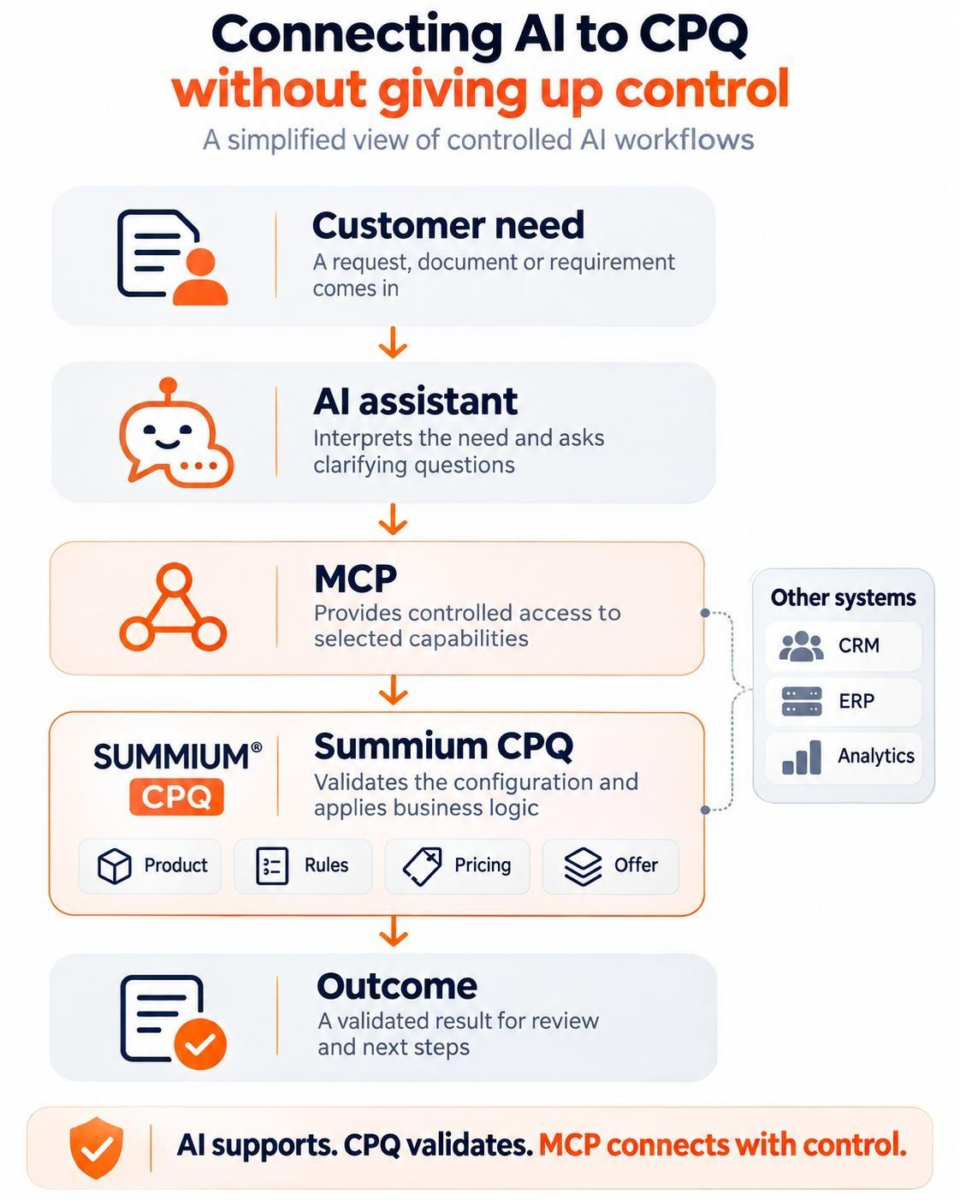
Figure 1: A simplified view of controlled AI workflows
CPQ beyond the application
AI changes the way users interact with business systems. In the future, not every user necessarily needs to start their work by opening a specific application and navigating its user interface.
For Summium® CPQ, this creates an interesting opportunity. The value of CPQ is not limited to its user interface. Its capabilities can also become available to other applications and AI assistants when they are needed. MCP provides one way to make that possible. The goal is not to give AI unlimited freedom. It is to give AI controlled access to trusted business capabilities.
This article is the second part of a series on how AI is changing CPQ. The first part of the series, “AI needs structure – why CPQ makes AI practical in complex sales”, is available here.
For a deeper look, download our whitepaper AI Powered CPQ: Turning Structured Data into Intelligent Workflows.
In the upcoming articles in this series, we will move from architecture to practical use cases: how AI can support product modeling, turn customer requirements into validated offers and make better use of the data already available in CPQ. Stay tuned!
Related Products
Author