
What are the benefits of strong information security practices?
Strong information security practices protect your business from cyber threats, data breaches, and financial losses while building customer trust and ensuring regulatory compliance.
Effective information security safeguards your digital assets, maintains operational continuity, and creates a competitive advantage. This guide answers the most common questions about why information security matters and how to implement robust practices in your organisation.
What is information security and why does it matter for businesses?
Information security refers to the protection of data and systems from unauthorised access, use, disclosure, disruption, modification, or destruction. It is built on three core principles known as the CIA triad: confidentiality (keeping sensitive data private), integrity (ensuring data remains accurate and unaltered), and availability (making sure systems and data are accessible when needed).
Every modern business, regardless of size or industry, relies on digital systems and data. Customer information, financial records, intellectual property, and operational data all require protection. The threat landscape continues to evolve as cybercriminals develop more sophisticated attack methods, including phishing, reverse engineering and malwares just to name few.

Information security has become essential because businesses now handle more sensitive data than ever before. A single harmless looking security incident can expand to large scale operation disrupt, reputation damage and lead to significant financial penalties. Small and medium-sized enterprises are particularly vulnerable, as attackers often view them as easier targets with fewer security resources. On the other hand large companies are attracting targets due to higher benefit for adversaries.
Protecting digital assets is not just about preventing attacks. It is about ensuring your business can operate reliably, maintain customer confidence, and meet legal obligations. Strong information security practices form the foundation for sustainable business growth in our connected world.
What are the key benefits of implementing strong information security practices?
Implementing robust information security practices delivers multiple advantages that directly impact your bottom line and business sustainability. These benefits extend far beyond simply avoiding negative outcomes, creating genuine value for organisations that prioritise security.
Protection of sensitive data and intellectual property is the most obvious benefit. Your customer records, trade secrets, product designs, and business strategies represent years of investment. Proper security measures ensure this valuable information stays protected from theft or exposure.
Customer trust and brand reputation grow stronger when people know their data is safe with you. In an era where data breaches regularly make headlines, demonstrating a strong commitment to security differentiates your business and strengthens customer relationships.
Business continuity and operational resilience improve significantly with proper security measures. When systems are protected against disruption, your team can work confidently without unexpected downtime or data loss interrupting critical processes.
Regulatory compliance becomes achievable rather than burdensome. GDPR, industry-specific regulations, and contractual requirements all demand certain security standards. Meeting these requirements protects you from penalties while opening doors to partnerships that require security certifications.
Financial risk reduction comes through preventing costly incidents. Breach-related expenses include investigation costs, legal fees, customer notification, remediation efforts, and potential regulatory fines. Prevention costs far less than recovery.
Competitive advantage emerges when you can demonstrate security credentials to potential clients and partners. Many organisations now require suppliers and partners to meet specific security standards before doing business together.
How do strong security practices protect your business from cyber threats?
Robust security practices work through multiple layers of protection that prevent, detect, and respond to various cyber threats. This layered approach ensures that if one defensive measure fails, others remain in place to protect your systems and data.
Employee awareness training addresses the human element, which remains the most common entry point for attackers. When staff recognise phishing attempts, suspicious links, and social engineering tactics, they become your first line of defence rather than your biggest vulnerability.
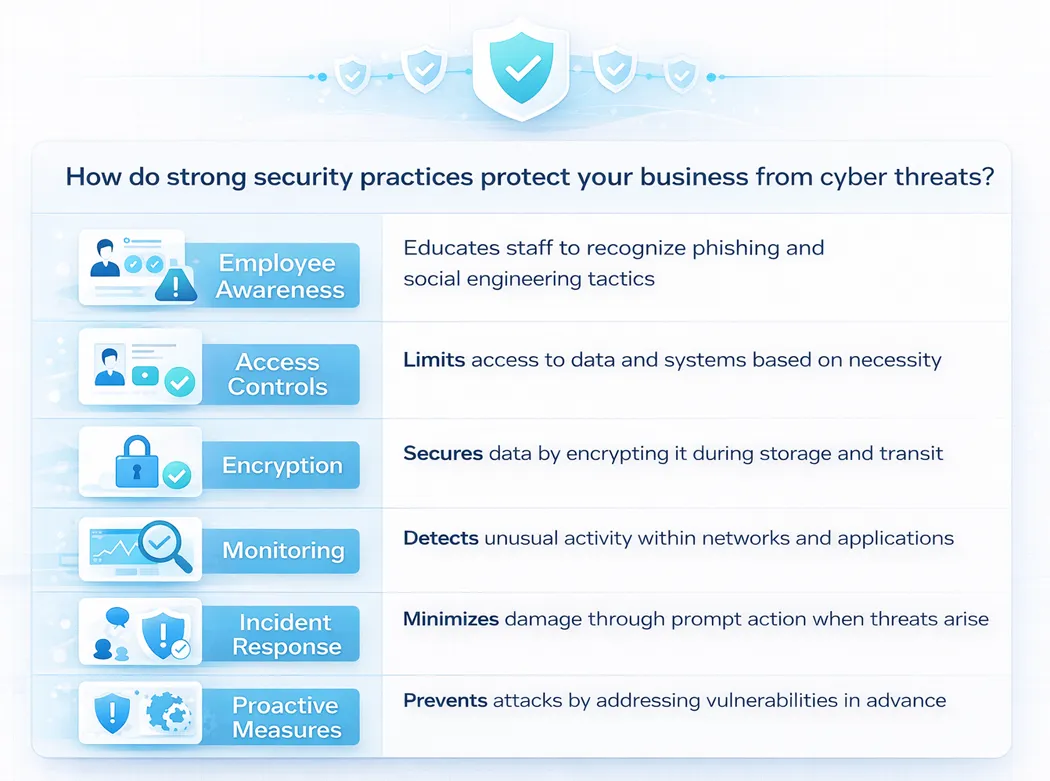
Access controls ensure that people can only reach the systems and data they need for their work. This principle of least privilege limits the potential damage from compromised accounts and reduces insider threat risks.
Encryption protects data both in transit and at rest, making stolen information useless to attackers who cannot decrypt it. Strong encryption standards applied consistently across your organisation create a fundamental security layer.
Monitoring systems provide visibility into what is happening across your network and applications. When unusual activity occurs, security teams can investigate quickly and respond before minor incidents become major breaches.
Incident response planning prepares your organisation to act decisively when security events occur. Having documented procedures, assigned responsibilities, and tested response capabilities minimises damage and speeds recovery.
Proactive security measures reduce your attack surface by identifying and addressing vulnerabilities before attackers can exploit them. Regular assessments, software updates, and configuration reviews keep your defences current against evolving threats.
What happens when businesses neglect information security?
Neglecting information security exposes organisations to consequences that can threaten their very existence. The impacts extend beyond immediate financial losses to affect every aspect of business operations and stakeholder relationships.
Data breaches represent the most visible consequence, exposing customer information, employee records, and proprietary business data. Once data is compromised, it cannot be uncompromised, and the effects ripple outward for years.
Financial losses accumulate rapidly after security incidents. Direct costs include forensic investigation, system remediation, legal representation, and regulatory fines. Indirect costs include lost business, increased insurance premiums, and diverted resources.
Regulatory penalties have grown substantially as authorities take data protection more seriously. GDPR fines can reach significant percentages of annual revenue, and industry-specific regulations carry their own penalty structures.
Reputational damage often proves more lasting than financial impacts. Customers, partners, and investors lose confidence in organisations that fail to protect sensitive information. Rebuilding trust takes years and may never fully succeed.
Operational disruptions from ransomware or system compromises can halt business activities entirely. Without proper backups and recovery capabilities, organisations may face extended downtime that threatens their market position.
Loss of customer confidence creates a downward spiral. Existing customers may leave, potential customers may choose competitors, and the negative publicity makes every future business conversation more difficult.
Long-term business viability comes into question when security incidents occur. Some organisations never recover from major breaches, while others spend years rebuilding what was lost in days or hours.
How can you start building stronger information security practices today?
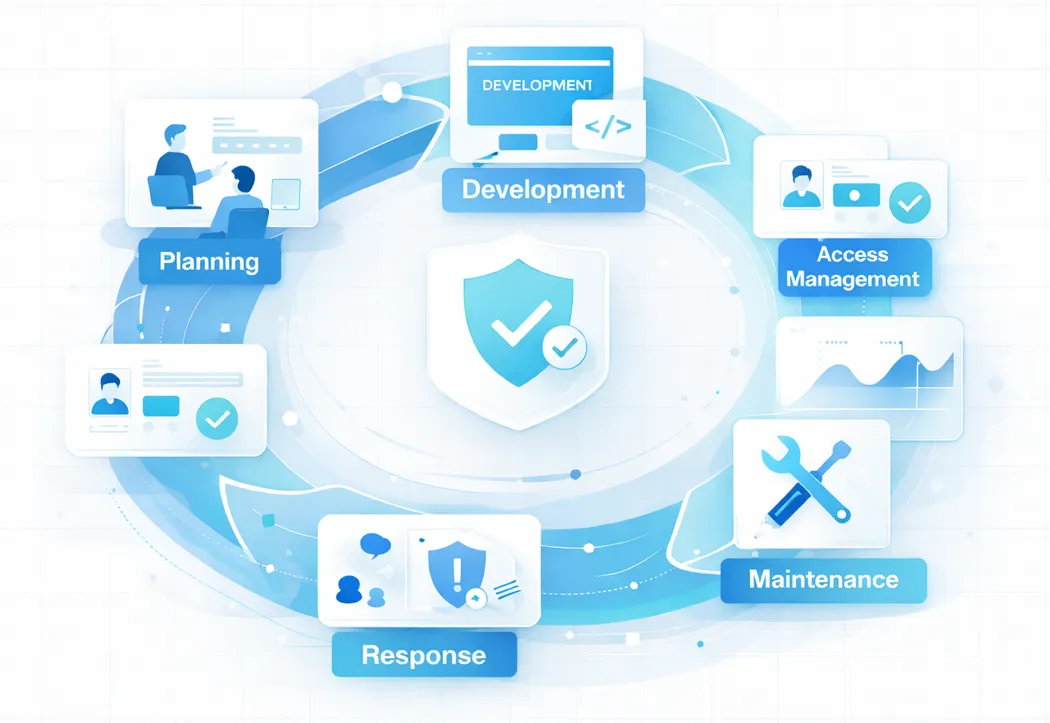
Building stronger security practices begins with understanding your current position and taking systematic steps toward improvement. You do not need to implement everything at once, but you do need to start with a clear direction.
Risk assessment provides your foundation. Identify what data and systems you have, where vulnerabilities exist, and what threats you face. This understanding guides your priorities and resource allocation.
Policy development establishes the rules and expectations for security across your organisation. Clear policies covering acceptable use, data handling, access management, and incident reporting give everyone a framework for secure behaviour.
Employee training transforms your workforce from a security liability into a security asset. Regular, engaging training helps staff understand threats and their role in protecting the organisation.
Technology investments should address your identified risks. This might include endpoint protection, network security tools, identity & access management solutions, and monitoring capabilities. Choose solutions that fit your actual needs rather than following trends.
Partnering with experienced security professionals accelerates your progress and fills capability gaps. Organisations specialising in secure software development and digital transformation bring expertise that would take years to develop internally.
We at Wapice understand the critical importance of building security into every solution from the ground up. Our ISO 9001:2015, ISO 14001:2015, and ISO/IEC 27001:2013 certifications demonstrate our commitment to quality, environmental responsibility, and information security management. When developing software solutions, embedded systems, or IoT platforms, we integrate security considerations throughout the development lifecycle.
To learn more about how we can support your organisation in developing secure, compliant solutions for your digital transformation journey, explore our software development and consulting services at Wapice.